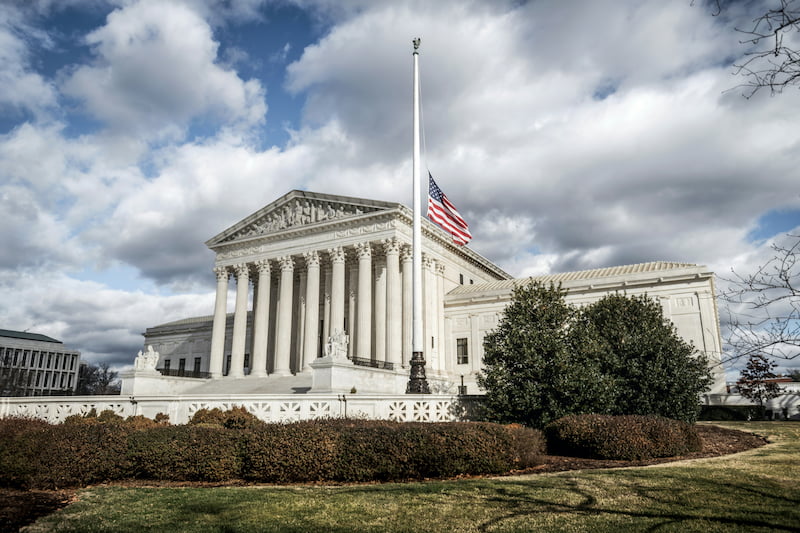
On June 5, 2025, the U.S. Supreme Court issued a unanimous decision in Catholic Charities Bureau, Inc. v. Wisconsin Labor and Industry Review Commission, a case that could reshape how states evaluate religious exemptions for nonprofit organizations. The ruling is especially important for faith-based charities, schools, and service providers that don’t fit the traditional mold of a church but are still deeply rooted in religious mission.
What Was the Case About?
Catholic Charities Bureau and several affiliated nonprofits in Wisconsin sought exemption from the state’s unemployment insurance tax. Like many states (over 40 states according to SCOTUS), Wisconsin law allows such exemptions for nonprofits that are (1) controlled by a church and (2) operated primarily for religious purposes.
There was no dispute that Catholic Charities was controlled by a church. Instead, the arguments focused on whether the organization was “operated primarily for religious purposes.” You might not have thought this was a difficult phrase to interpret, but the parties have been trading wins and losses over this dispute since 2016, as the litigants fought their way through the administrative and judicial systems.
Eventually, Wisconsin’s highest court, the Wisconsin Supreme Court, determined that Catholic Charities was not “operated primarily for religious purposes.” It reasoned that because Catholic Charities did not proselytize (seek to spread the Catholic religion) or limit its services to Catholics, its activities were not “primarily religious.” In other words, the court focused on what the organization did, like providing social services to the public, rather than why it did those things.
Catholic Charities appealed, arguing that this interpretation violated the First Amendment’s guarantee of religious neutrality.
US Supreme Court’s Decision
Writing for a unanimous Court, Justice Sonia Sotomayor reversed the Wisconsin decision, with a quite critical view of the issue that has taken so many years to resolve:
“It is fundamental to our constitutional order that the government maintain ‘neutrality between religion and religion.’ There may be hard calls to make in policing that rule, but this is not one.”
The Court held that the state’s interpretation of “operated primarily for religious purposes” violated the First Amendment by favoring certain religious practices over others.
Essentially, the Court said that states cannot judge whether an organization is religious based on whether its activities look religious from the outside. Instead, what matters is whether the organization is motivated by religious beliefs, even if its services (like job training or disability support) appear to have nothing to do with religion.
The Court reinforced that religious organizations should not face penalties for choosing not to proselytize or for serving individuals of all faiths, emphasizing that the First Amendment prohibits states from imposing theological distinctions, such as requiring evangelism or religious instruction, as a condition for exemption. Additionally, it reaffirmed that any state-sponsored denominational preferences must meet strict scrutiny, the highest level of judicial review, which demands that such preferences be narrowly tailored to achieve a compelling governmental interest.
Why Does This Matter for Nonprofits?
This decision has broad implications for religiously affiliated nonprofits across the country. Many states use language similar to Wisconsin in laws governing tax exemptions, employment rules, and zoning. Many states condition their property tax exemptions on whether the property is used primarily for charitable or religious purposes, among other exemptions.
Faith-based service providers are protected, even when their work looks secular. A Catholic homeless shelter, a Jewish family services agency, or a Muslim health clinic can’t be excluded from religious exemptions just because they serve the broader public and don’t include religious education or programming into their services.
Theological neutrality is required. States cannot favor one religious expression over another, such as preferring groups that evangelize over those that don’t. While this may raise questions about what a religious organization must show a state to prove that it’s motivations are religious, we have not yet seen what new issues the Court’s decision will bring.
Action Items for Nonprofits
If your organization is affiliated with a religious body and provides community services, this case may strengthen your position when applying for exemptions or defending your religious identity in regulatory matters. If your organization conducts secular services or programming, now may be a good time to review how your mission, governance documents, and programming reflect your religious purpose. As with anything critical to your operations, documenting the religious motivations behind your work, even if your services are open to all, will serve as a helpful safety measure in the long run if there ever is a question as to whether your activities are primarily religious.
Finally, consulting with legal counsel when applying for exemptions that hinge on religious status is advisable.